Shopping Cart (0)
Close



From its Italian origins to classrooms around the world today — a clear, honest guide to understanding what a Montessori school is and how it works.
A Montessori school is an educational institution that follows the teaching philosophy created by Dr Maria Montessori, an Italian physician and educator who developed her method in Rome in 1907. At its heart, a Montessori school believes that children are naturally curious and capable of directing their own learning — and it designs every aspect of the classroom environment to support that belief.
Today, Montessori schools operate in more than 110 countries, serving children from infancy through to secondary education. But what actually happens inside one — and is it the right choice for your child?
Dr Maria Montessori opened her first school, the Casa dei Bambini (Children’s House), in a low-income district of Rome in 1907. Working with children who had previously been considered difficult to educate, she observed that when given the right environment and freedom to choose their activities, children would focus deeply, work independently, and develop a lasting love of learning.
Her findings were so striking that educators from across Europe and North America travelled to Italy to observe her classrooms. The method spread rapidly — and has continued to grow ever since.
The differences between a Montessori school and a conventional school are significant and go well beyond aesthetics. They reflect a different set of beliefs about how children develop and what education is fundamentally for.
Every Montessori classroom is carefully designed to be accessible, orderly, and beautiful. Materials are stored on low, open shelves so children can retrieve and return them independently. Nothing is placed in the room without a purpose. The physical environment is considered a « third teacher » — as important as any adult in the room.
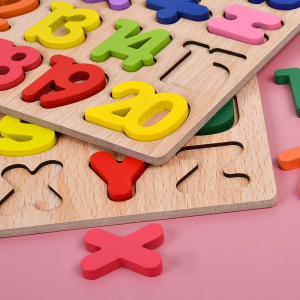
Montessori classrooms feature a distinctive set of learning materials developed by Dr Montessori herself — the Pink Tower, the Sandpaper Letters, the Golden Bead Material for maths, the Moveable Alphabet, and many more. These materials are designed to be self-correcting, meaning children can identify their own mistakes without adult intervention, which builds confidence and independence.
Rather than separating children by year group, Montessori schools group pupils across a three-year age band. A six-year-old works alongside eight- and nine-year-olds. This allows younger children to be inspired and mentored by older peers, while older children reinforce and deepen their own understanding by explaining concepts to others.
Children in a Montessori school have real freedom — but it operates within a clear structure. They may choose what to work on, where to sit, and for how long, but they are expected to respect the environment, their classmates, and the materials. This balance between liberty and responsibility is central to the Montessori ethos.
Montessori teachers are trained to observe each child carefully and introduce new work when the child shows readiness — not according to a fixed timetable. Rather than standing at the front of the room and delivering lessons to the whole class, the guide moves quietly through the space, giving individual or small-group presentations as needed.
Montessori schools cover the same broad areas of learning as any school — literacy, numeracy, science, history, geography, the arts, and physical education. What differs is the sequence, pace, and method of delivery.
In the early years (ages 3–6), the focus is on sensorial exploration, practical life skills (pouring, fastening, sweeping), early language, and foundational maths using physical materials. By the primary years (ages 6–12), children engage with complex subjects through a series of inspiring narrative lessons called the Great Lessons, which place all learning within the grand story of the universe and humanity’s place in it.
Crucially, children are never rushed through material. A child who needs more time with a concept stays with it. A child who is ready to move on does so — without waiting for the rest of the class.
Accredited schools use trained teachers who hold a recognised Montessori diploma for the age group they teach, and they are inspected to ensure fidelity to the method.
