Shopping Cart (0)
Close



What Is Montessori Learning Montessori learning is a child-centered educational approach that encourages children to learn through exploration, hands-on activities, and independent discovery. Developed by Dr. Maria Montessori, this method focuses on nurturing a child’s natural curiosity and helping them develop essential life skills at their own pace.
Unlike traditional teaching methods that rely heavily on direct instruction, Montessori learning allows children to choose activities based on their interests while educators and parents act as guides rather than instructors.
Today, Montessori learning is widely used in schools and homes around the world because of its proven ability to foster independence, confidence, creativity, and a lifelong love of learning.
Montessori learning is based on the belief that children learn best when they are actively engaged in meaningful activities. The environment is carefully prepared with educational materials that encourage exploration and self-directed learning.
Children are given the freedom to:
This approach helps children become active participants in their education rather than passive learners.
Children are encouraged to follow their interests and select activities that capture their attention. This increases motivation and engagement.
Montessori learning emphasizes practical experiences. Children learn concepts through touching, manipulating, and exploring educational materials.
One of the primary goals of Montessori learning is to help children become self-sufficient and confident in their abilities.
Every child develops at a different pace. Montessori learning recognizes these differences and allows children to progress naturally.
Learning spaces are carefully organized to encourage exploration, concentration, and independence.
Parents and educators appreciate Montessori learning because it offers numerous developmental benefits:
Children learn to make decisions, solve problems, and complete tasks on their own.
Montessori activities are designed to hold children’s attention and help them develop focus.
Successfully completing tasks independently helps children develop self-esteem and confidence.
Children learn to analyze situations, make choices, and find solutions through exploration.
Montessori learning helps children build strong foundations in literacy, mathematics, language, and science.
Open-ended activities encourage imagination and creative thinking.
There are many Montessori-inspired activities that parents can introduce at home.
Number tracing worksheets help children learn number recognition while improving handwriting and fine motor skills.
Children learn letters and sounds through engaging tracing and phonics activities.
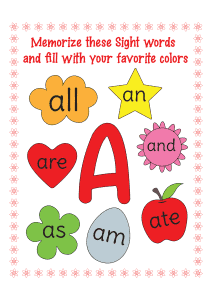
Sight word exercises help young learners improve reading fluency and comprehension.
Picture-based flashcards help children expand their vocabulary and language skills.
Coloring activities combine creativity with learning and help reinforce educational concepts.
These activities improve memory, concentration, and logical thinking.
You do not need a Montessori classroom to benefit from Montessori learning principles. Parents can create a Montessori-inspired environment at home by:
Simple daily activities can support a child’s natural development and love of learning.
Some of the most effective Montessori-inspired learning resources include:
These resources help children learn through active engagement rather than passive instruction.
Many parents are turning to Montessori learning because it promotes both academic achievement and personal development. Children develop essential life skills such as independence, responsibility, concentration, and problem-solving while enjoying the learning process.
As homeschooling and supplemental home education become more popular, Montessori-inspired educational resources continue to gain attention among families worldwide.
At Shop By Joury, we provide educational printables designed to support Montessori-inspired learning at home. Our learning resources help children build skills in reading, writing, vocabulary, numbers, tracing, and creativity through fun and engaging activities.
Whether you are homeschooling, supporting preschool learning, or looking for educational activities for young children, our printable learning materials make learning enjoyable and effective.
Montessori learning is an educational approach that empowers children to learn independently through hands-on experiences and self-directed exploration. By encouraging curiosity, creativity, and confidence, Montessori learning helps children develop the skills they need for lifelong success.
Parents can easily introduce Montessori principles at home using educational printables, flashcards, tracing activities, and engaging learning resources that make education both fun and meaningful.
